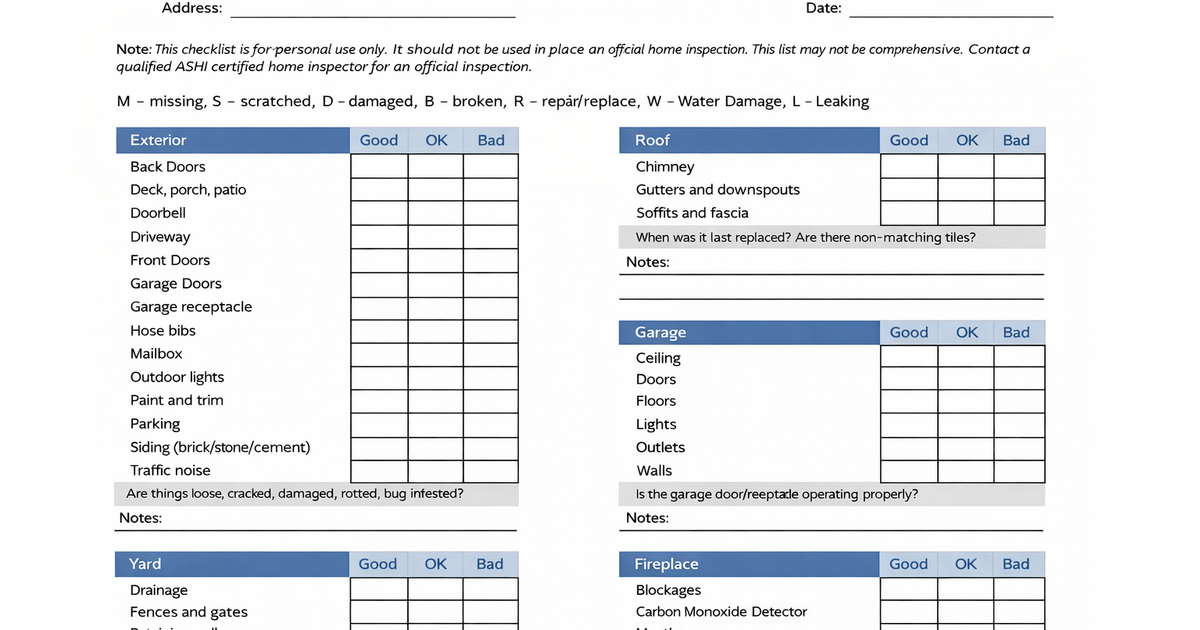
Rental Inspection Checklist for Landlords
A rental inspection checklist documents every element of your property's condition at move-in and move-out, the only defensible evidence when determining security deposit deductions and the difference between a $50 dispute and a $2,000 loss.
Why Inspections Protect Your Investment
Without documentation, you lose every security deposit dispute.
Tenant moves out with a hole in the drywall. You deduct $200 from their deposit. They claim the hole was there when they moved in. You have no photos, no signed checklist. In small claims court, you lose.
I learned this on property #2. The tenant's lawyer produced a move-in checklist that I never collected. I refunded $1,400 in damages that I'm 90% certain weren't pre-existing. Never again.
The rule: If you can't prove it with dated photos and a signed checklist, it didn't happen.
The 47-Point Inspection Checklist
Document every item as: Good, Fair, Poor, or N/A. Take photos of anything marked Fair or Poor.
Exterior (7 items)
- Front door and locks: function, condition, weather stripping
- Back/side doors: same as above
- Windows: screens intact, locks work, no cracks
- Roof visible condition: missing shingles, obvious damage
- Gutters: attached, clear, no visible damage
- Driveway/walkways: cracks, settlement, tripping hazards
- Landscaping: lawn condition, tree branches, drainage issues
Living Areas (8 items)
- Walls: holes, stains, scuff marks, nail holes
- Ceilings: stains, cracks, water damage
- Flooring: carpet condition, hardwood scratches, tile cracks
- Baseboards and trim: damage, paint condition
- Light fixtures: functional, clean, all bulbs working
- Outlets and switches: functional, cover plates intact
- Windows: open/close properly, locks work, blinds/curtains
- Doors: open/close properly, locks work, doorstops present
Kitchen (10 items)
- Refrigerator: interior clean, shelves intact, ice maker works (if applicable)
- Stove/oven: burners work, oven heats, clean condition
- Dishwasher: runs full cycle, drains properly, interior clean
- Microwave: functional, clean interior
- Cabinets: doors align, hinges work, interior clean
- Countertops: chips, stains, burns, caulk condition
- Sink: drains properly, no leaks, faucet functional
- Garbage disposal: runs, no jams, drains
- Flooring: same as living areas
- Hood/exhaust fan: functional, filter clean
Bathrooms (9 items per bathroom)
- Toilet: flushes properly, no leaks at base, seat intact
- Sink: drains, no leaks, faucet functional, stopper works
- Tub/shower: drains, no leaks, caulk condition, no chips
- Showerhead: functional, no leaks
- Exhaust fan: runs, vents properly
- Mirrors/medicine cabinet: intact, hinges work
- Towel bars and hardware: secure, intact
- Flooring: tile condition, grout condition, no water damage
- Walls/ceiling: mold, mildew, water stains, paint peeling
Bedrooms (6 items per bedroom)
- Walls: same as living areas
- Flooring: same as living areas
- Closets: doors work, shelves intact, rods secure
- Windows: same as living areas
- Ceiling fan/light: functional, blades clean
- Smoke detector: present, functional, battery current
Utilities and Systems (7 items)
- HVAC: heats, cools, filter condition, thermostat works
- Water heater: age, condition, proper temperature
- Electrical panel: labeled, accessible, no visible issues
- Smoke detectors: all present and functional (one per bedroom + common areas)
- Carbon monoxide detectors: present on each level (if gas appliances)
- Fire extinguisher: present, current inspection tag (if provided)
- Garage door: opens/closes, auto-reverse works, remotes functional
Move-In Inspection Process
Before showing the property: Walk the unit yourself and document its condition. This is your baseline.
At lease signing:
- Walk the property with the tenant
- Document every item on the checklist together
- Note any existing damage with specific descriptions ("2-inch scratch on hardwood near front door")
- Take dated photos of every room plus close-ups of any damage
- Both parties sign and date the checklist
- Give tenant a copy immediately, in person or via email
Time limit: Some states require move-in inspections within 3-7 days of occupancy. Check your state's landlord-tenant laws.
Pro tip: I video the entire walk-through on my phone, narrating condition as I go. A 10-minute video is better evidence than 50 photos because it shows continuity, you can't claim I cherry-picked angles.
Move-Out Inspection Process
Schedule in advance: Give written notice 24-48 hours before inspection. Some states require it.
Use the same checklist: Compare current condition to move-in documentation.
Document everything:
- Photograph every room again
- Note specific differences from move-in
- Distinguish normal wear and tear from damage
Normal wear and tear (not deductible):
- Minor scuffs on walls
- Carpet wear in high-traffic areas
- Faded paint from sunlight
- Small nail holes for pictures (typically 3-5 per wall)
- Worn finish on door handles
Damage beyond wear (deductible):
- Large holes in drywall
- Burns or stains on carpet
- Broken windows
- Damaged appliances
- Unauthorized paint colors
- Pet damage
Calculate deductions precisely. Don't just estimate. Get quotes or receipts. A court won't accept "I think it costs about $400." They'll accept "$385 invoice from ABC Drywall Repair." Track these costs in your rental property expenses spreadsheet so they're accounted for in your annual returns.
Inspection Timing and Frequency
Routine inspections: I inspect every property annually, a non-negotiable part of building a real estate portfolio that holds its value. It's how I found a slow leak under a bathroom sink that would have caused $5,000 in damage if left another 6 months. Always give proper written notice (24-48 hours in most states).
Tracking Inspections Across Your Portfolio
At 5+ properties, inspection schedules get complicated. This is one of the recurring tasks that makes managing rental properties harder at scale. You need a system that tracks:
- Last inspection date per property
- Upcoming inspection due dates
- Condition notes and photos over time
- Maintenance items identified during inspections
I use Operator to track property condition alongside rent, expenses, and market data. When I run an annual inspection, I log notes and attach photos so I have a running history of each property's condition. At move-out, I pull up 3 years of documentation in 30 seconds.
FAQ
What should be on a rental inspection checklist?
A comprehensive rental inspection checklist covers exterior (doors, windows, roof), interior rooms (walls, floors, ceilings, fixtures), kitchen appliances, bathroom fixtures, and utility systems (HVAC, water heater, smoke detectors). Document each item as Good, Fair, or Poor with photos of any existing damage. Both landlord and tenant should sign and date the checklist.
How often should landlords inspect rental properties?
Conduct move-in and move-out inspections for every tenant. Perform routine inspections every 6-12 months to catch maintenance issues early. Monthly drive-by inspections check exterior condition and lease compliance. Always provide proper written notice before entering, 24-48 hours in most states.
What is normal wear and tear vs. tenant damage?
Normal wear and tear includes minor wall scuffs, carpet wear in high-traffic areas, faded paint, small nail holes, and worn finishes on hardware. Tenant damage includes large holes in walls, carpet burns or stains, broken windows, damaged appliances, unauthorized modifications, and pet damage. Only damage beyond normal wear can be deducted from security deposits.
Built for this
Operator runs every metric in this article automatically. Add a property, and you'll see cap rate, cash-on-cash, DSCR, and NOI in seconds — not hours. Your deal library saves every analysis so nothing gets lost.