Off-market means a property is for sale, or could be bought, without a public listing on the MLS or the big home search sites. Listing sites also use "off market" as a status label for any home without an active listing, so the first step for an investor is knowing which meaning you're looking at.
Key takeaways
- Off-market has two meanings: a home sold or offered without public marketing, and a website status label for a home that simply isn't listed right now.
- Since September 30, 2025, NAR rules let sellers put a listing in the MLS while delaying its release to public sites, and other agents in that MLS can still see it.
- The evidence on price is mixed: a Bright MLS study from about 2021 found off-MLS homes sold for less, while brokerages with private listing programs report the opposite.
- In our example, a $3,000 off-market discount on a $200,000 house disappears once a wholesale assignment fee reaches $3,000.
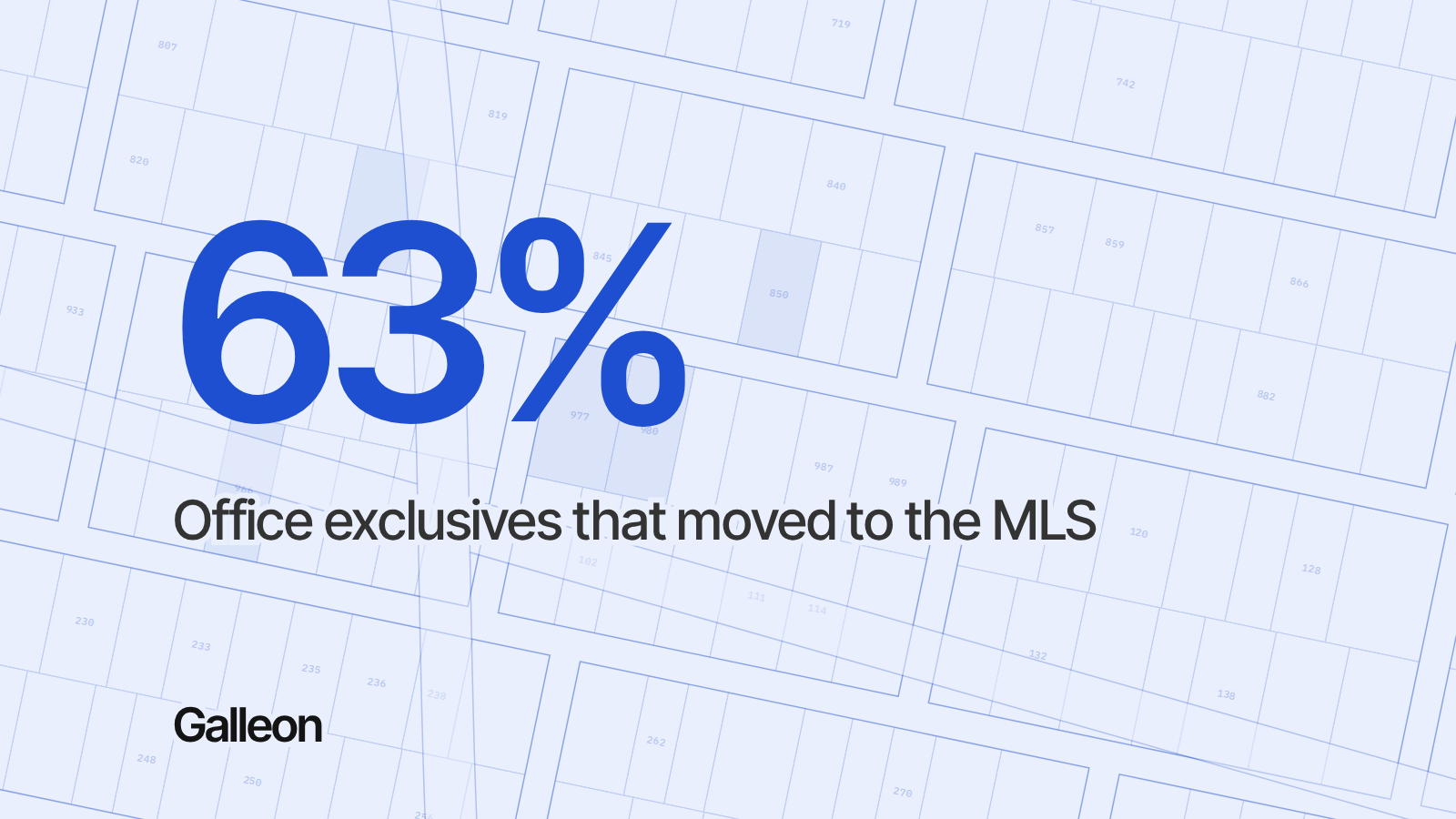
- Bright MLS found that 63% of office exclusive listings it studied didn't sell that way and moved to the MLS, so being fast on new listings matters as much as finding private ones.
What does off-market mean for investors?
When an investor says a deal is off-market, they usually mean the owner is willing to sell but the home isn't on the MLS or the big search sites. You hear about it from the owner, a listing agent's private network, another investor or a wholesaler.
When a website says a home is "off market," it usually means something much simpler: there's no active listing. The owner may not want to sell at all, the home may have just sold, or a listing may have been pulled. That label alone tells you nothing about whether you can buy it.
Off-market tells you how a home is being sold. It says nothing about whether the price is good.
Off-market vs pocket listing, withdrawn and expired
These words get mixed up a lot, even by people in the business. Here's how they differ, using NAR's official categories where they exist. Exact status rules vary by MLS, so ask your agent how your local MLS uses each one.
| Term | What it means | Can your agent see it? |
|---|---|---|
| Off-market (investor use) | Owner will sell, but there's no public listing | Only if the owner or someone in the deal tells them |
| Pocket listing | Informal term for a listing an agent keeps private and shares through their network | Only if the listing agent shares it |
| Office exclusive (NAR term) | Marketed only inside the listing brokerage, with a signed seller disclosure | Not in the MLS while it stays exclusive |
| Delayed marketing exempt (NAR term, since 2025) | Filed in the MLS but held back from public sites for a delay each MLS sets | Yes, other MLS participants can see it |
| Withdrawn | Pulled from active status, usually while the listing agreement still stands | Shows in MLS history |
| Expired | The listing agreement ran out without a sale | Shows in MLS history |
| Website "off market" label | Any home without an active listing on that site | Not a listing status at all |
Withdrawn and expired homes are worth a second look for buy-and-hold investors. The owner tried to sell once, so a direct, respectful conversation may still be welcome. Our guide on how to find off-market properties walks through that outreach.
What changed in 2025?
NAR created a new option called delayed marketing exempt listings. The seller can tell their agent to hold the listing back from public home search sites for a while, and each MLS sets how long. MLSs had to put it in place by September 30, 2025, according to NAR's announcement. During the delay, the listing stays visible to other MLS participants.
The older rule still stands too. NAR's Clear Cooperation Policy, approved in 2020, says a listing must be filed with the MLS within 1 business day of public marketing, and NAR repeated that in May 2026.
What counts as public marketing? One-to-one talks between two brokers don't, but sharing across several brokerages does, per OneKey MLS. So a true pocket listing has to stay small to stay private.
Your agent can see some "off-market" homes
This is the practical tip most pages miss. A delayed marketing exempt listing won't show up when you scroll a home search site, but your buyer's agent can see it inside the MLS. If you work with an agent, ask them to set up alerts that include these listings and to tell you how long your local MLS delay runs.
Are off-market properties cheaper?
Sometimes, but the evidence is mixed, and each source has a stake in its answer.
- Bright MLS, in a study from about 2021, found the median on-MLS sale price was 16.98% higher than off-MLS. Part of that gap likely comes from the homes being different, so don't read it as a 17% bargain.
- Brokerages that run private listing programs have published their own data showing sellers did better before going to the MLS.
For a buyer, the seller's loss is your discount and the seller's premium is your overpayment. When we read these studies, we treat any discount as a maybe and make sure the deal still works without one.
Worked example: when does an off-market deal save money?
Say you own 6 doors and want a 3-bed single-family rental around $200,000. A wholesaler sends you an off-market deal. The same week, a similar home hits the MLS at $200,000.
Now say the off-market owner agrees to $3,000 under that MLS price. That's a 1.5% discount, so the seller's price is $197,000. What you actually pay depends on who's between you and the seller.
Example (illustrative discount and fees, not quotes):
| Path | Seller's price | Assignment fee | You pay | vs MLS listing |
|---|---|---|---|---|
| New MLS listing | $200,000 | $0 | $200,000 | Same |
| Direct from owner | $197,000 | $0 | $197,000 | $3,000 less |
| Wholesaler, $3,000 fee | $197,000 | $3,000 | $200,000 | Same |
| Wholesaler, $10,000 fee | $197,000 | $10,000 | $207,000 | $7,000 more |
The break-even test is simple: the off-market deal wins only when the discount is bigger than the fee plus any extra due diligence you take on. Off-market sales often come without the disclosure packet and showing history you'd get on an MLS home, so budget for your own inspection and title work.
Watch out: Don't plug in a discount you hope for. Use the price and the actual fee on the contract, then check the rent you expect against recent rental comps before you sign.
Once the price checks out, run the deal the same way you would any other. Our rental property analysis guide covers cash flow, cap rate and financing.
Pros and cons of off-market deals for buyers
Pros
- Fewer competing buyers, so you may avoid bidding wars.
- Room to work out terms with the owner, like closing date or repairs.
- A chance at a lower price when the seller values privacy or speed.
- Access to owners who'd never list, like a landlord ready to retire.
Cons
- No public comps on the asking price, so you set the value yourself.
- Less information up front: fewer photos, disclosures and showing records.
- Middlemen's fees can erase the discount, as the example shows.
- More legwork, from finding owners to handling more of the paperwork.
How to get the speed without the fee
Much of what investors want from off-market deals is being first. The Bright MLS study found that 63% of office exclusives didn't sell as office exclusives and moved to the MLS (about 2021 data). So a lot of "private" inventory ends up public, and the investor who sees it on day one has a real edge.
That's where Operator helps. Its Buy Box Agent checks on-market and off-market properties every day against the location, property type and signals you set (like absentee ownership, high equity or vacancy), then sends you new matches with a 0 to 100 Buy Box score and pricing against estimated value. New listings and price changes are flagged, so a home that fits your buy box lands in front of you fast, with no assignment fee attached. Signal coverage depends on what each county records.
Last updated November 17, 2026. This is general information, not tax, legal or lending advice. Talk to your CPA, attorney or lender about your situation.
FAQ
Is a pocket listing the same as off-market?
A pocket listing is one kind of off-market sale: an agent keeps the listing private and shares it through their own network. Off-market is the wider term and also covers owners selling directly without any agent.
Why does a home say off market on a listing site?
It usually means the site has no active listing for that home. The owner may not be selling, the home may have recently sold, or a listing may have been pulled. Check the county record or ask an agent to look at the MLS history.
Can my agent see off-market listings?
They can see delayed marketing exempt listings in their own MLS, since those stay visible to MLS participants during the delay. Office exclusives and true pocket listings are only visible if the listing agent shares them.
Are off-market homes always cheaper?
No. A Bright MLS study found off-MLS homes sold for a lower median price, but brokerages with private listing programs report the opposite, and fees can wipe out any discount.
What's the difference between withdrawn and expired?
A withdrawn listing has been pulled from active status, usually while the listing agreement is still in place. An expired listing's agreement ran out without a sale. Exact rules vary by MLS.