AI for real estate investors works best as a skeptical second analyst. It can rebuild a seller's numbers, underwrite the deal at the loan terms you'll actually get and flag risky lease clauses, but it can't see live listings or county records on its own, so you feed it verified inputs and you make the final call.
Key takeaways
- The most useful AI workflows for small investors are checks: auditing seller paperwork, underwriting every deal by the same rules and reviewing leases.
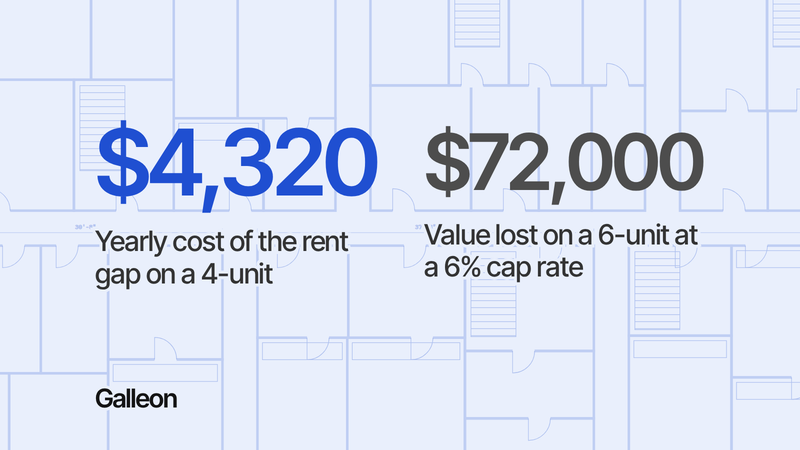
- In our example fourplex, the seller's numbers showed $44,848 of NOI, and rebuilding them with standard assumptions cut that to $29,440, a gap worth $192,600 of price at an 8% cap rate.
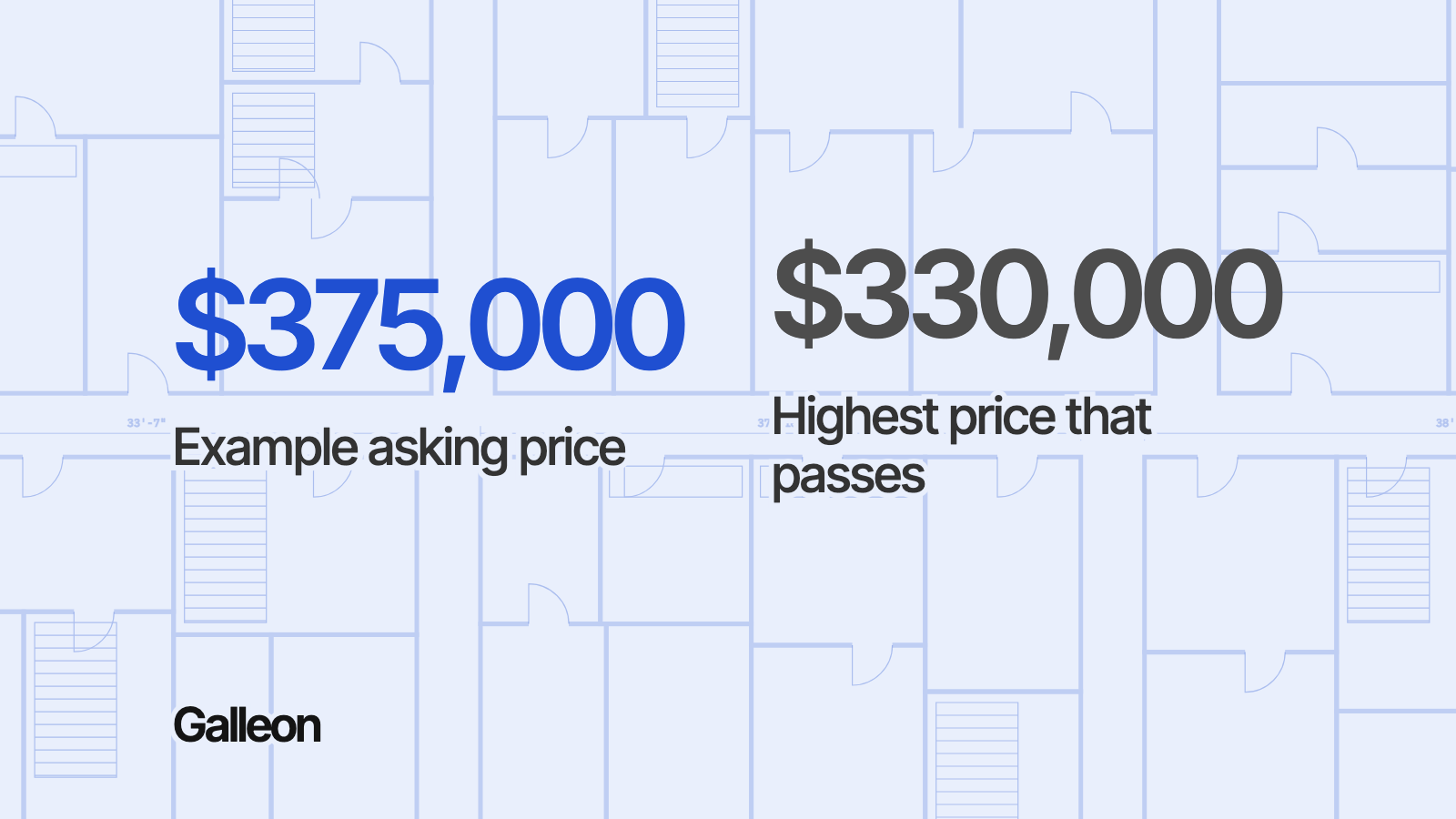
- At a $375,000 asking price, the example fails both the 1.25 DSCR test and the 8% cash-on-cash test, and the highest price that passes both is about $330,000.
- Freddie Mac's 7.18% average (as of November 5, 2026) is for owner-occupants putting 20% down, so give the AI an investor rate or it will make the deal look better than it is.
- A skill runs the same method on every deal while a prompt has to be pasted each time, and if you chain two skills you should set them to the same expense assumptions.
- AI doesn't replace your attorney, your lender or your judgment, so treat what it finds as a list of questions to bring them.
What can AI actually do for a small real estate investor?
Most pages on this topic are lists of tools. But remember, if you own a few doors and want scale your portfolio, the tool matters less than the specific jobs you give it. Three jobs that immediately pay off:
- checking a seller's numbers before you offer
- underwriting every deal by the same rules, and
- reviewing your leases before a tenant does.
All three are checks on numbers or words that someone else handed you, and general assistants like Claude and ChatGPT handle that well because the documents are right in front of them. What they handle badly is finding the data itself. A general chat tool doesn't have live MLS listings or county property records unless you connect a source, and if you let it, it will fill the hole with a guess.
If you've never run a rental's numbers by hand, read our guide on how to analyze a rental property first. You'll catch the AI's mistakes much faster when you know what the math should look like.
Skills vs. prompts: what's the difference?
A prompt is a set of instructions you paste into a chat each time. A skill is a method written down and packaged as a file you install once, so the AI runs it the same way on every deal. When you're comparing ten deals, you want all ten judged by the same rules, which is why the newsletter's underwriting and audit workflows are built as skills.
| Skill | Prompt | |
|---|---|---|
| Setup | Install once | Paste into each chat |
| Consistency | Same method on every deal | Only as consistent as what you paste |
| Our free examples | Multifamily Underwriting, Seller Paperwork Audit | Lease review |
To install the Multifamily Underwriting skill in Claude, the steps from our newsletter issue on AI underwriting are:
- Download the skill file from the issue.
- In Claude, open Settings, then Capabilities.
- Turn on code execution and file creation.
- Go to Skills, choose Add and upload the file.
- Start a new chat and give it the listing, the rent roll and the T-12 (the last 12 months of income and expenses).
The Seller Paperwork Audit file also works in ChatGPT, Gemini, Claude Code and Codex.
Example: one fourplex through three AI workflows
To show the whole workflow, we built a hypothetical fourplex from the newsletter samples: four units renting for $1,200 a month in a 1952 building, listed at $375,000. That's $57,600 a year in gross potential rent. Every figure below is an example, and the taxes, insurance and owner-paid utilities are placeholders you'd replace with county records and real quotes.
Step 1: Audit the seller's paperwork
Run the audit before you underwrite, because underwriting is only as good as the income and expenses you feed it. Say the seller's T-12 shows 2% vacancy, no management fee, $300 per unit for repairs, no reserve for capital expenses (CapEx) and the taxes the seller paid before the sale. The audit rebuilds each line instead of trusting it.
Example: seller's NOI vs. rebuilt NOI
Hypothetical fourplex, 4 units at $1,200/month. Rebuilt column uses the underwriting skill's defaults. Taxes, insurance and utilities are placeholders.
| Line item | Seller's T-12 | Rebuilt |
|---|---|---|
| Gross potential rent | $57,600 | $57,600 |
| Vacancy | 2% ($1,152) | 5% ($2,880) |
| Effective gross income | $56,448 | $54,720 |
| Management | $0 | $5,472 |
| Repairs | $1,200 | $4,104 |
| CapEx reserve | $0 | $4,104 |
| Property taxes | $4,800 | $6,000 |
| Insurance | $3,200 | $3,200 |
| Owner-paid utilities | $2,400 | $2,400 |
| Total expenses | $11,600 | $25,280 |
| Net operating income (NOI) | $44,848 | $29,440 |
Source: Galleon example using defaults from Real Estate Operator issues 1 and 2 (July and October 2026).
The $15,408 gap between those two NOI figures is worth $192,600 of price at an 8% cap rate. That's money you'd pay the seller for income that disappears once you're paying a manager and saving for the next roof.
Taxes are the line people miss most. When a property sells, the county may reassess it at the new price, so the seller's tax bill is a poor guide to yours.
Assume the seller's numbers are wrong until the paperwork proves them right.
The newsletter found the same pattern at a larger size. In the 12-unit paperwork audit sample, the seller claimed $93,000 of NOI and the audit came to $71,700, which is 23% lower. The rent roll totaled $172,800, but the T-12 showed only $151,000 actually collected. At a 7% cap rate, that $21,300 NOI gap was worth about $304,000 of price. The audit also grades the paperwork A, B or C and drafts questions for the broker, so you have something specific to send back.
Step 2: Underwrite at real loan terms
The Multifamily Underwriting skill's defaults are 75% LTV, a 25-year amortization, 1.5% closing costs, 5% vacancy, and 7.5% of income each for repairs and CapEx plus 10% for management. A deal passes when it hits a 1.25 debt service coverage ratio (DSCR), an 8% cash-on-cash return and a cap rate at least 2 points above the local market's. If a deal fails, the skill works backward to the highest price that passes. We ran the rebuilt NOI at a placeholder rate of 7.75% (more on that rate below).
Example: underwriting results at two prices
Rebuilt NOI of $29,440, 75% LTV, 7.75% rate, 25-year amortization, 1.5% closing costs.
| Example | At $375,000 asking | At $330,000 max |
|---|---|---|
| Loan (75% LTV) | $281,250 | $247,500 |
| Cash needed (25% down + 1.5% closing) | $99,375 | $87,450 |
| NOI | $29,440 | $29,440 |
| Cap rate | 7.9% | 8.9% |
| Annual debt service | $25,492 | $22,433 |
| Annual cash flow | $3,948 | $7,007 |
| DSCR (needs 1.25) | 1.15 (fails) | 1.31 (passes) |
| Cash-on-cash (needs 8%) | 4.0% (fails) | 8.0% (passes) |
Source: Galleon example using the Multifamily Underwriting skill's defaults (Real Estate Operator, July 2026).
At the asking price, the NOI covers the loan payments only 1.15 times, and the $99,375 you'd put in earns 4.0%. That's a no-go on both tests.
Working backward, cash-on-cash is the test you need to pay attention to. The DSCR test alone would allow a price of roughly $346,000, but to earn 8% on the cash you put in, the price can't go above about $330,000. Whether 8% is the right bar for you depends on your goals, so change it in the skill if yours is different.
The third test depends on your market. At $330,000 the cap rate is 8.9%, so the deal passes wherever similar buildings trade at about a 6.9% cap rate or lower.
One note on amortization: conforming loans usually amortize over 30 years, which lowers the payment. The skill's 25-year default is the more cautious choice, and it's easy to change. Don't forget to change it to your loan terms / go over all of the skill's assumptions!
Step 3: Stress-test the rate
The skill also shows what happens if the rate moves half a point either way. Here's the example rerun at the $330,000 max price.
Example: rate sensitivity at a $330,000 price
$247,500 loan, 25-year amortization, $29,440 NOI, $87,450 cash needed.
| Rate | Annual debt service | Cash flow | DSCR | Cash-on-cash |
|---|---|---|---|---|
| 7.25% | $21,467 | $7,973 | 1.37 | 9.1% |
| 7.75% | $22,433 | $7,007 | 1.31 | 8.0% |
| 8.25% | $23,417 | $6,023 | 1.26 | 6.9% |
Source: Galleon example.
At 8.25%, the deal still clears the 1.25 DSCR, but cash-on-cash drops to 6.9%. So a $330,000 offer only works if your real rate comes in at 7.75% or better, which is a good reason to get a lender quote before you write the offer.
Step 4: Review the lease once you own it
After you close, the next AI job is the lease. Your tenants can paste your lease into ChatGPT as easily as you can, so it pays to read it the way they will, every year before renewals.
The newsletter's sample lease review looked at a 1952 Cleveland fourplex with $1,200 rent and an $1,800 deposit. The prompt flagged:
- A 60-day deposit-return clause against Ohio's 30 days, with up to $3,600 plus fees in exposure (the deposit plus an equal amount in damages).
- No lead-paint disclosure. Federal rules require one for most housing built before 1978.
- A clause letting the landlord enter without notice.
- Clauses for tenant-paid attorney fees and a liability waiver that, per the review, Ohio doesn't enforce.
- $30 a year in deposit interest owed: 5% of the $600 of deposit above one month's rent.
Take that list to your attorney before you change a word, because state law changes and the AI may be working from old rules. A clear, fair lease is also part of good service, since it tells residents exactly what to expect from you. The lease review prompt is free for newsletter subscribers.
What loan terms should you give the AI?
Give it the terms a lender would quote you as an investor. The rate most people know comes from Freddie Mac's weekly survey, which put the 30-year fixed at 7.18% as of November 5, 2026, down from 7.24% the week before and up from 6.22% a year earlier, according to Freddie Mac's Primary Mortgage Market Survey. That survey covers borrowers with good to excellent credit putting 20% down on a home they'll live in.
Investment loans cost more. Fannie Mae adds loan-level price adjustments (LLPAs) to investment property loans, and the size depends on your LTV and the number of units.
They also come with tighter limits. As of its March 2026 version, the Fannie Mae eligibility matrix caps investment purchases at 75% LTV for 2 to 4 units and 85% for one unit.
There's a ceiling on how many loans you can stack, too. Fannie Mae limits a borrower to 10 financed properties when the new loan is for an investment property, and a duplex or fourplex counts as one property. Reserve requirements rise as the count goes up.
If you're aiming for 20+ doors that limit belongs in your plan now. It's one reason growing investors look at DSCR loans, which qualify the property's rent instead of your personal income.
When you don't have a quote, the underwriting skill suggests the 10-year Treasury yield plus 1.5 to 2.5 points as a placeholder. Our example used 7.75%, which assumes investor pricing lands 0.57 points above the survey rate. A real quote beats both.
Watch out: If you paste the headline survey rate into an underwriting prompt, the AI will make the deal look better than any lender will.
Do the two skills use the same assumptions?
No, and it matters if you run one into the other. The paperwork audit and the underwriting skill ship with different defaults for two big expense lines.
| Assumption | Seller Paperwork Audit | Multifamily Underwriting |
|---|---|---|
| Management | 8% of income | 10% of income |
| Repairs | $300 per unit per year | 7.5% of income |
On our fourplex, the audit's repair default comes to $1,200 a year against $4,104 under the underwriting skill, and its management default comes to $4,378 against $5,472. If you feed the audited NOI into the underwriting skill without matching them, you'll get a number somewhere in between and won't know why. Pick one set of assumptions, write it down and tell both skills to use it.
Where does AI get real estate numbers wrong?
These are the spots where we'd double-check every time:
- Live data. A general assistant doesn't see MLS listings or county records unless you connect a source, so bring verified rents, taxes and insurance yourself.
- Rent claims. The underwriting skill flags any claimed rent more than 5% above the median of the rent comps. Keep that rule even when you work without the skill.
- Taxes after a sale. The seller's tax bill reflects the seller's assessment. Look up how your county reassesses after a sale.
- Estimates that look like facts. The skills fill gaps with estimates and say so. Ask any AI to label which numbers it estimated, then replace them.
- Law that moved. Lease rules vary by state and change over time, so use AI to find questions and your attorney to answer them.
- Privacy. Rent rolls and leases hold your tenants' personal information. Remove names and contact details before you upload, and check your AI account's data settings.
- The decision. The AI can tell you a deal passes, but only you know whether you want to own it for the next ten years.
The live-data gap is where Operator helps. Operator is the system of record for your properties, and it runs two agents, the Buy Box Agent and the Rent Monitoring Agent. The Buy Box Agent screens new listings in your markets overnight, pulls county tax bills, insurance estimates and rent comps for each one, and runs cash flow at your financing terms, so the inputs you'd otherwise gather by hand are already there when you sit down to decide.
How to start this week
- Subscribe free at realestateoperator.com and download the Multifamily Underwriting skill and the Seller Paperwork Audit.
- Write down your assumptions once: vacancy, repairs, CapEx, management and your pass/fail tests.
- Get a current rate quote for an investment loan at the LTV you'll actually use.
- Run a deal you already closed or passed on, and compare the output with your own spreadsheet. Where they differ, find out why before you trust either one.
- Before your next lease renewal, run each lease through the review prompt and send the flags to your attorney.
The skills and the prompt are free, so the only cost is the AI plan you may already pay for.
Last updated November 7, 2026. Rates and lending limits change, so recheck them before you rely on these numbers.
This is general information, not tax, legal or lending advice. Talk to your CPA, attorney or lender about your situation.
FAQ
Can ChatGPT or Claude underwrite a rental property?
Yes, if you give it verified numbers and a fixed method. It can calculate NOI, DSCR, cash-on-cash and a maximum price in seconds, but it doesn't have live MLS listings or county records on its own. Bring real rents, taxes, insurance and a lender's rate quote, and check its math against your own spreadsheet the first few times.
What's the difference between an AI skill and a prompt?
A prompt is instructions you paste into each chat. A skill is a packaged method you install once, and the AI runs it the same way on every deal.
Why does the AI say my deal fails when the listing says it cash flows?
Usually because the AI rebuilt the expenses. Seller numbers often leave out management, a CapEx reserve or the tax increase after a sale. In our example fourplex, those gaps took NOI from $44,848 down to $29,440, and the deal stopped passing at the asking price.
Is it safe to upload rent rolls and leases to an AI tool?
Those files contain your tenants' personal information, so remove names and contact details before you upload and review your AI account's data and training settings. The math doesn't need anyone's name.
Can AI replace my attorney or lender?
No. AI can flag a lease clause or estimate a rate, but state law changes and investor pricing depends on your credit, LTV and property type. Use the AI's output as the list of questions you bring to them.